Wall Street closes at a record for the first time since end of January
Investing.com - European stocks traded lower on Thursday, as investors digested a deluge of quarterly corporate results amid elevated geopolitical tensions.
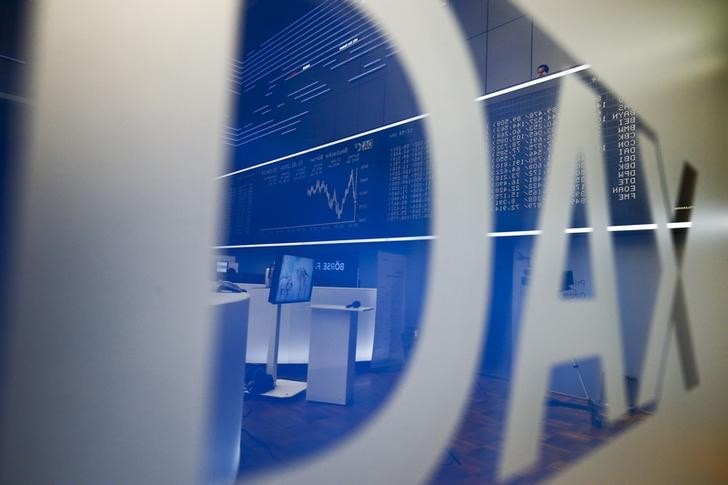
The DAX index in Germany dropped 1%, the CAC 40 in France slipped 0.4% and the FTSE 100 in the U.K. fell 0.6%.
Corporate results continue to flow
It is another busy day for earnings, in what has been a generally positive quarter with around 60% of European companies having beaten earnings expectations so far.
Pernod Ricard (EPA:PERP) reported a 5% decline in second-quarter like-for-like sales, as weak consumer demand and destocking in the United States and China continued to weigh on the French spirits maker.
The fall, however, in the second quarter was not as bad as the 7.6% contraction reported in the first quarter, thanks to improving dynamics in India and in global travel retail.
Rio Tinto (LON:RIO) reported flat underlying earnings for 2025 as stronger copper and aluminium volumes and tighter cost control offset weaker iron ore prices for the world’s largest iron ore producer.
Renault (EPA:RENA) reported a net loss of €10.93 billion for 2025 after booking a €9.3 billion non-cash charge linked to a change in the accounting treatment of its stake in Nissan, even as the French automaker’s underlying operating performance held up and revenue grew 3%.
Nestle (SIX:NESN) reported a 17% drop in annual net profit and a sharp contraction in margins for 2025, as restructuring charges, asset writedowns and a December infant formula recall compounded pressure on the world’s largest food company.
Zurich Insurance (SIX:ZURN) posted a record operating profit of $8.9 billion for 2025, a 14% increase from a year earlier, as a sharp improvement in its property and casualty underwriting result and growth across all three business segments drove the Swiss insurer to its best annual performance.
Airbus Group (EPA:AIR) reported a slightly stronger profit for the fourth quarter, although the French planemaker forecast a weaker-than-expected deliveries figure for 2026 amid an engine shortage.
French-Dutch carrier Air France KLM (EPA:AIRF) reported its first-ever operating result above €2 billion on Thursday, as revenue growth and lower fuel costs offset rising airport charges and labor expenses.
Krones (ETR:KRNG) reported fourth-quarter earnings that exceeded analyst expectations on profitability while slightly missing revenue forecasts, as the German packaging equipment manufacturer continued its profitable growth trajectory despite challenging macroeconomic conditions.
Elevated geopolitical tensions
Away from the corporate sector, geopolitical tensions remain elevated after Ukrainian and Russian negotiators met this week for their third U.S.-mediated meeting of 2026 without any breakthrough on key sticking points, including territory.
Moscow wants Kyiv to withdraw its forces from the remaining 20% of the eastern Donetsk region that Russia does not control, something Ukraine refuses to do.
Additionally, little progress was made during nuclear talks between the U.S. and Iran in Geneva this week, with U.S. Vice President JD Vance saying Washington was weighing whether to continue diplomatic engagement with Tehran or pursue "another option".
Satellite images show that Iran has recently built a concrete shield over a new facility at a sensitive military site and covered it in soil, experts say, advancing work at a location reportedly bombed by Israel in 2024.
Crude prices surge higher
Oil prices are higher on Thursday, as heightened military activity in the Middle East raised fears of potential disruptions to oil flows from this key region.
Brent futures gained 2.2% to $71.90 a barrel, and U.S. West Texas Intermediate crude futures rose 2.5% to $66.67 a barrel.
Both benchmarks settled more than 4% higher on Wednesday, posting their highest settlements since January 30.
Media reports stating heightened military and naval activity in the Persian Gulf have reinforced market perceptions of supply vulnerability.
At the same time, hopes for any easing of sanctions on Russian energy exports faded after Russia-Ukraine talks produced no breakthrough.
Further support came from industry data showing a tighter U.S. supply picture, as the American Petroleum Institute reported U.S. crude stockpiles fell by about 609,000 barrels in the week to Feb. 13.
Official government data from the Energy Information Administration is due later on Thursday.
